Strona główna » Panels
Panels
Panel 1 | AI for Science
Description
AI is becoming autonomous research partner, helping to achieve remarkable results in many fields of science, from bioinformatics to quantum physics and mathematics. According to the Nature Research Intelligence report „AI in Science”, by the end of 2024 over 70 thousand papers in physical sciences, and over 120 thousand papers in life sciences have been published. AI capabilities across the entire scientific discovery cycle have been demonstrated, from hypothesis development, experimental design, data analysis, writing papers and iteratively refine them based on self-generated peer reviews. Fully autonomous systems like „The AI Scientist” (Sakana) or „Virtuous Machines” can generate novel ideas, and execute experiments (even with human participants). Give „Nobel Turing Challenge” conferences already discussed development of autonomous AI systems capable of achieving Nobel Prize-worthy discoveries. This panel will discuss the current state of AI4Science, focusing on the evolution towards collaborative human-specialized agent systems, tools and autonomous platforms currently available, and the most spectacular successes driving the rapid advancement across scientific domains.
Moderator – prof. Włodzisław Duch

Bio
Włodzisław Duch is the head of the Neurocognitive Laboratory in the Center of Modern Interdisciplinary Technologies, and the Neuroinformatics and Artificial Intelligence group in the University Centre of Excellence Dynamics, Mathematical Analysis and Artificial Intelligence at the Nicolaus Copernicus University, Toruń, Poland. PhD in theoretical physics/quantum chemistry (1980), postdoc at the Univ. of Southern California, Los Angeles (1980-82), D.Sc. in applied math (1987). President of the European Neural Networks Society executive committee (2006-2008-2011), Fellow of the International Neural Network Society (2013), Asia-Pacific Artificial Intelligence Association (2022), and the International Artificial Intelligence Industry Alliance (2024). Expert of the European Union science programs, member of the high-level expert group of European Institute of Innovation & Technology (EIT). Worked in the School of Computer Engineering, Nanyang Technological University (2003-07, 2010-12 as the Nanyang Visiting Professor). Visiting professor at the University of Florida; Max-Planck-Institute, Munich, Germany, Kyushu Institute of Technology, Meiji and Rikkyo University in Japan, and several other institutions. He is/was on the editorial board of IEEE TNN, CPC, NIP-LR, Cognitive Neurodynamics, Journal of Mind and Behavior, and 16 other journals; published over 380 peer-reviewed scientific papers, has written or co-authored 6 books and co-edited 21 books, and published about 300 conference abstracts and popular articles on diverse subjects. In 2014-15 he served as a deputy minister for science and higher education in Poland. His DuchSoft company has made in 1990 the GhostMiner data mining software package, for many years marketed by Fujitsu.
With a wide background in many branches of science and understanding of different cultures he bridges many scientific communities. To unwind he plays electronic wind instruments and dives with whale sharks.
Panelists
Prof. Przemysław Kazienko, Wrocław University of Science and Technology
Prof. Jakub Nalepa, Silesian University of Technology
Prof. Piotr Sankowski, Ideas Institute, University of Warsaw
Ph.D. Bartosz Naskręcki, Adam Mickiewicz University / Centre for Credible AI WUT
Panel 2 | Cybersecurity in the Age of AI
Description
Artificial intelligence is transforming both the tools of defense and the tactics of attack. As organizations increasingly relyon AI, cybercriminals are also using it to automate threats, personalize phishing, and exploit system vulnerabilities at unprecedented scale. This panel will explore how AI is reshaing the global cybersecurity landscape – from national security to business and critical infrastructure resilience – and what strategies are needed to stay ahead of evolving risks.
In Poland alone, more than 113,000 serious cyberattacks were recorded in 2024, placing the country among the top three most targeted in Europe. With critical infrastructure facing dozens of attempts every day, the discussion will focus on how both government and industry can leverage AI responsibly to predict, prevent, and respond to threats. The session will bring together leading experts from academia, industry, and policy to discuss the future of security in an AI-driven world.
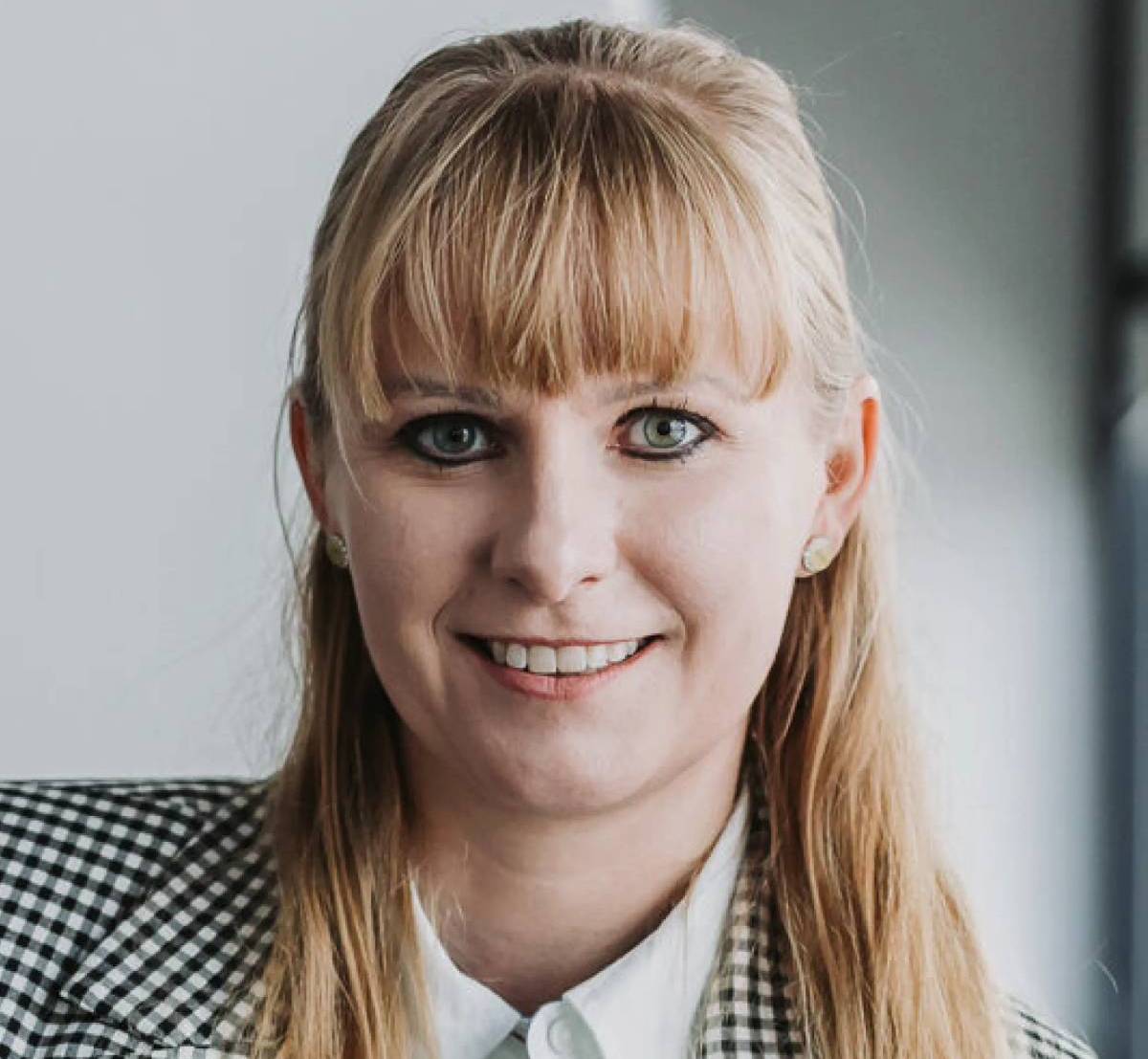
Moderator – prof. Joanna Jaworek-Korjakowska
Bio
Joanna Jaworek-Korjakowska, Univ. Professor at Faculty of Computer Science, Director of the Centre of Excellence in Artificial Intelligence and at the AGH University in Kracow, Poland. In 2019 she obtained Habilitation in the field of technical sciences with emphasis in artificial intelligence. She is an expert at the Confederation of Laboratories for Artificial Intelligence Research in Europe (CLAIRE), member of IEEE, Polish Artificial Intelligence Society as well as an alumnus of the TOP 500 Innovator programme at Stanford University, USA. Her main research interests focus on computer vision, data mining, artificial intelligence especially deep learning methods, anomaly detection as well as clustering. J. Jaworek has been awarded Honorable Mention Award during the CVPR’19 conference (ISIC workshop) and Bekker Fellowship’22 to conduct research at the Stanford University, USA.
Panelists
Jarosław Gracel, Chairman of the Board, ASTOR
Sławomir Kumka, Director of IBM Poland
Tomasz Jaworski, Palo Alto Networks, ABM, Microsoft
Wojciech Wrzesień, Director of Cybersecurity Services, Euvic Solutions S.A.
Panel 3 | A friendly AI development ecosystem as an opportunity for Poland’s technological sovereignty on the global market
Moderator – Joanna Szczegielniak
Description
In the face of the growing dominance of global technology giants and EU regulations and strategic documents such as the EU AI Act, The AI Continent Action Plan, Apply AI Strategy, European Strategy for AI in Science and Horizon Europe programmes, Poland’s technological sovereignty is no longer an ambition but a geopolitical necessity.
The invited experts will focus on the challenge of creating and implementing a friendly ecosystem for the development of AI and breakthrough technologies, which will enable Poland to transform from a consumer to a creator of technology. This process is possible through effective cooperation between the scientific community, business and the public sector.
Key issues:
• Legal framework: challenges and opportunities created by the EU,
• Partnership between science and business for economic growth,
• Public sector support – role, regulation and financing,
• Investments in innovation – are they worth it?
• AI Talent Programme,
• Geopolitical perspective on the development of AI and breakthrough technologies in Poland.

Bio
Joanna Szczegielniak – President of the Board of the Connecting the Future Foundation. Creator of innovative artificial intelligence solutions combined with the latest achievements in neuroscience. Designer of Human AI Interaction services dedicated to leaders and teams. Strategist and advisor in the field of neuroleadership and the implementation of breakthrough technologies in business. Expert and trainer in the practical application of artificial intelligence and neuroscience solutions for business and the public sector. Leader of the GRAI Section for artificial intelligence development policy. Member of the Polish Committee for Standardisation in Artificial Intelligence. Graduate of Executive Master of Business Administration (EMBA), NeuroLeadership Academy™ and Artificial Intelligence & Digital Transformation for Executive. Physicist by education, strategist, advisor and marketing specialist with over 25 years of experience.
Panelists
Olga Zabolewicz, NASK
Robert Kroplewski, GAIA, GPAI, COMSTELLATION
Marcin Wizgird, ALTEN Polska
Daniel Kessler, hub4industry, KPT