Strona główna » Keynote speakers
Keynote speakers
Prof. Marco Dorigo, Université Libre de Bruxelles
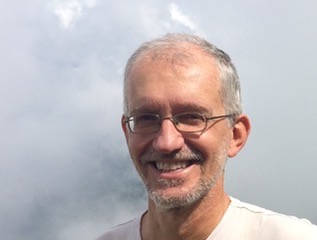
Title: Self-Organizing Nervous System for Robot Swarms
Abstract:
.
Bio
Marco Dorigo received the Ph.D. degree in electronic engineering in 1992 from Politecnico di Milano, Milan, Italy. From 1992 to 1993, he was a Research Fellow at the International Computer Science Institute, Berkeley, CA. In 1993, he was a NATO-CNR Fellow, and from 1994 to 1996, a Marie Curie Fellow. Since 1996, he has been a tenured Researcher of the FNRS, the Belgian National Funds for Scientific Research, and co-director of IRIDIA, the artificial intelligence laboratory of the ULB. His current research interests include swarm intelligence, swarm robotics, and metaheuristics for discrete optimization. He is the Founding Editor of Swarm Intelligence, and an Associate Editor or member of the Editorial Boards of many journals on computational intelligence and adaptive systems. Dr. Dorigo is a Fellow of the AAAI, EurAI, and IEEE. He was awarded numerous international prizes among which the Marie Curie Excellence Award in 2003, delivered by Philippe Busquin, European Commissioner for Research, Science and Innovation; the five-year scientific prize du F.R.S.-FNRS in 2005, delivered by Albert II, King of Belgium; the Cajastur International Prize for Soft Computing „Mamdani Prize” in 2007, delivered by Prof. Lofti Zadeh; the IEEE Frank Rosenblatt Award in 2015, and the IEEE Evolutionary Computation Pioneer Award in 2016. He is also the recipient of an ERC Advanced Grant awarded by the European Research Council.
Prof. Holger H. Hoos – Humboldt Professor for AI, RWTH Aachen University
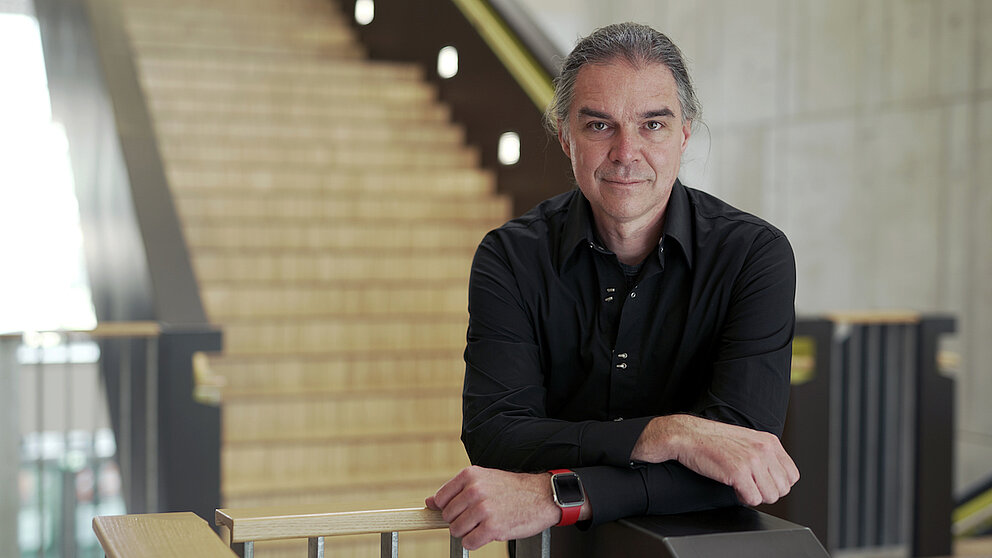
Title: Learning, reasoning and optimisation: Adversarial robustness of neural networks
Abstract:
Over the last decade, machine learning methods, notably neural networks, have played a key role in enabling major progress in artificial intelligence and its applications. Unfortunately, despite their excellent performance in many use cases, neural networks have been shown to be sensitive to input perturbations, including adversarial attacks. In this presentation, I will give an introduction to neural network robustness and explain how work in this area effectively combines AI methods from machine learning, optimisation and automated reasoning. I will explain the concept of robustness verification and introduce local robustness distributions, which afford a rigorous and nuanced assessment of neural network robustness against input perturbations. I will give examples from image and audio classification and briefly discuss connections to questions of bias and fairness, as well as the way in which this line of work relates to the broader effort of my group towards safe, dependable and sustainable AI.
Bio
Holger H. Hoos holds an Alexander von Humboldt Professorship in AI at RWTH Aachen University (Germany), where he also leads the RWTH AI Center. Holger’s research is aimed at methodological and technological advances in human-centred AI, AI for Good and AI for All. Specifically, he seeks to improve the efficiency of AI methods, by automatically increasing performance and reducing resource needs; and to broaden access to and use of cutting-edge AI methods. Overall, Holger and his group develop and study AI methods that augment rather than replace human intelligence, and that help human experts to overcome their biases and limitations. Known for his work on machine learning and optimisation methods for the automated design of high-performance algorithms and on stochastic local search, Holger has developed – and vigorously pursues – the paradigm of programming by optimisation (PbO); he is also one of the originators of the concept of automated machine learning (AutoML). Holger has a penchant for work at the boundaries between computing science and other disciplines; much of his work is inspired by and has broad impact on real-world applications.
In November 2021, Holger has been selected for an Alexander von Humboldt Professorship in AI, Germany’s most highly-endowed research award, which honours its recipients for their outstanding research record and aims to facilitate long-term and groundbreaking research contributions. Supported by this award and substantial additional resources made available by the university, he started building a new research group at RWTH Aachen University (Germany), dedicated to methodological and technological advances in human-centred AI, AI for Good and AI for All, in January 2022.
Prof. Christian Napoli, La Sapienza Roma
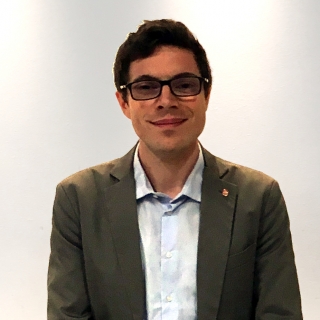
Title: Modeling Time and Structure: Modern Challenges and Old Tricks for Trustworthy AI Systems
Trustworthy artificial intelligence systems must operate reliably over time and support human interaction in real-world conditions. However, many modern data-driven approaches focus on static performance metrics and treat data as collections of independent samples, overlooking temporal organization and structural dependencies that are intrinsic to signals and dynamic processes.
This talk discusses why modeling time and structure is essential for building trustworthy AI systems, and why several effective solutions rely on principles that are well known but often neglected in current practice. By analyzing common failure modes in signal-based and evolving data, the talk shows how ignoring temporal and structural information leads to unstable behavior, reduced robustness, and loss of user trust.
Rather than proposing new architectures, the focus is on design principles: representation choices, inductive bias, and simple modeling strategies that improve stability, predictability, and interpretability over time. Examples from real systems illustrate how combining modern learning techniques with these “old tricks” can lead to AI systems that are not only accurate, but also reliable and usable in human-centered scenarios. The talk concludes by outlining open challenges for trustworthy AI operating in non-static environments.
Bio
Christian Napoli is Associate Professor with the Department of Computer, Control, and Management Engineering „Antonio Ruberti”, Sapienza University of Rome, since 2019, as well as Scientific Director and co-founder (2015) of the International School of Advanced and Applied Computing (ISAAC), and associate researcher to the Institute of Systems Analysis and Informatics (IASI) of the National Research Council (CNR) since 2022. He received the B.Sc. degree in Physics from the Department of Physics and Astronomy, University of Catania, in 2010, where he also got the M.Sc. degree in Astrophysics in 2012 and the Ph.D. in Computer Science in 2016 at the Department of Mathematics and Computer Science, he obtained the National Scientific Abilitation as associate professor in Computer Engineering (2017) and computer science (2019). Christian Napoli has been Research Associate with the Department of Mathematics and Computer Science, University of Catania, from 2018 to 2019, while, previously, Research Fellow and Adjunct Professor with the same department from 2015 to 2018. He has been a Student Research Fellow with the Department of Electrical, Electronics, and Informatics Engineering, University of Catania, from 2009 to 2016, a collaborator of the Astrophysical Observatory of Catania and the National Institute for Nuclear Physics, since 2010. He has been several time Invited Professor at the Silesian University of Technology, Visiting Academic at the New York University, and responsible of more than 25 institutional topics from 2011 until now for Undegraduate, Graduate and PhD students in Computer Science, Computer Engineering and Electronics Engineering. His teaching activity focused on Artificial Intelligence, Neural Networks, Machine Learning, Computing Systems, Computer Architectures, Distributed Systems, and High Performance Computing. He is involved in several international research projects, serves as reviewer and member of the board program committee for major international journals and international conferences. His current research interests include neural networks, artificial intelligence, computational models, and high performance computing.
Marek Magryś, ACK Cyfronet AGH
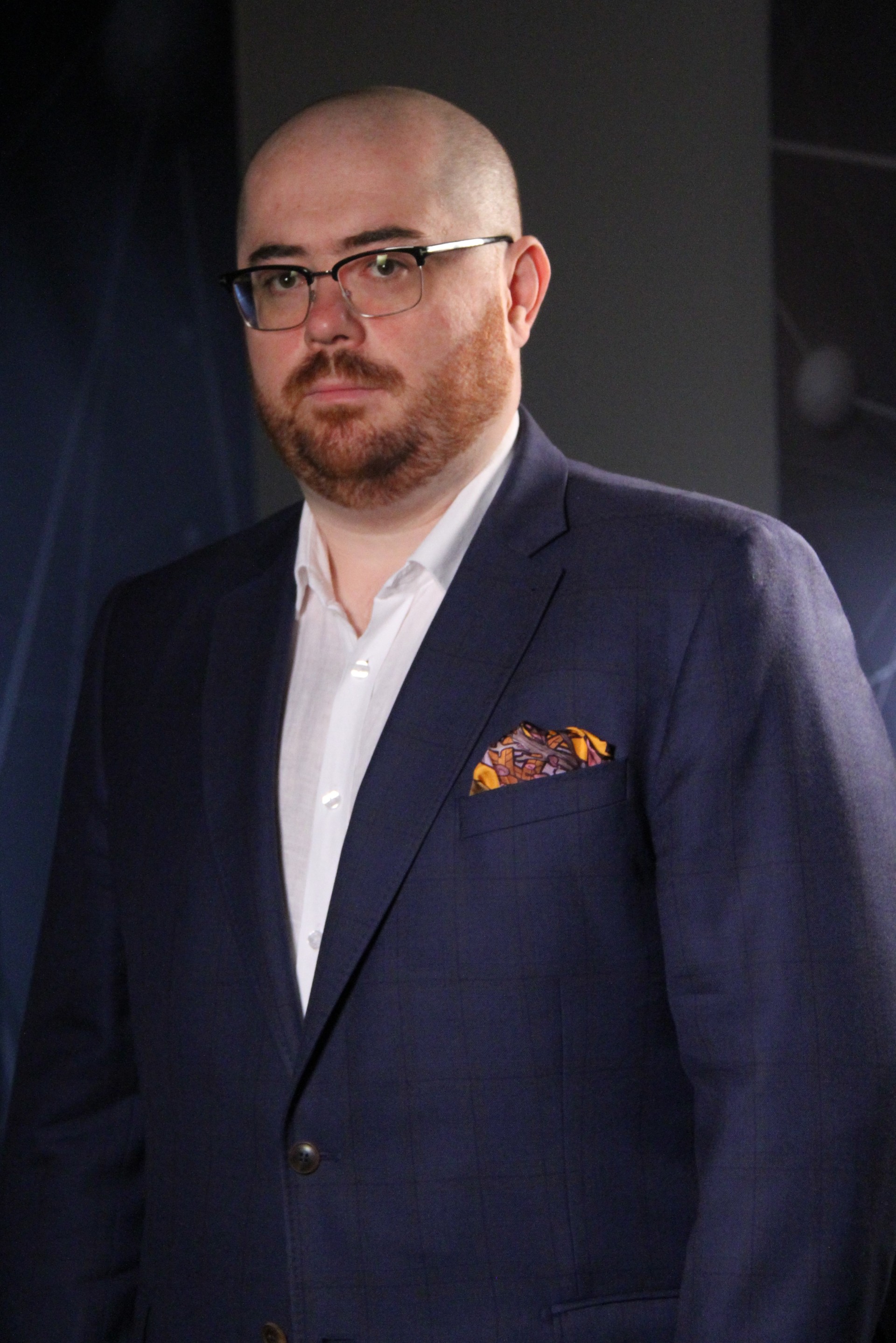
Bio
Acting Director of Academic Computer Centre Cyfronet AGH, head of the National Centre of Computing Competence within EuroHPC, specialist in design, implementation, testing and operation of computing systems for HPC (High Performance Computing) and AI (Artificial Intelligence). Chief architect of the fastest Polish supercomputers of recent years, Helios, Athena and Prometheus. Expert for the European Commission, member of the INFRAG advisory group for EuroHPC and HPC-AI Leadership Organization EMEA Advisory Committee.